A continuous legacy stretching from the 13th century to the present day. Tracing the path from Nordic origins to the master builders and engineers of Oxfordshire and beyond.
Direct Ancestral Line
Select a year below to explore the lineage and historical context.
1558: John Busby (Died c. 1558)
The Context: John lived during the turbulent Tudor period. It was an era defined by the English Reformation and the dissolution of the monasteries. This heavily impacted the rural economies tied to abbey lands, from which the Busbys originally made their fortune by collecting rents and trading wool.
The Family: The family had migrated down from Yorkshire in the 1200s. John Busby of the hamlet of Clifton was a husbandman (a tenant farmer). He had two sons, Symond and William, and a daughter, Jane. His will was proved at Oxford in the year Queen Elizabeth I took the throne, requesting burial in Deddington churchyard.
1598: Simon Busby (Died c. 1598)
The Context: Simon lived through the heart of the Elizabethan Golden Age. England experienced growing agricultural prosperity, the defeat of the Spanish Armada, and a cultural renaissance.
The Family: Operating as a husbandman, Simon demonstrated the family's growing stability and devotion to the church. He left ten shillings to the poor of Clifton and Deddington, and a bushel of barley to the Deddington church. He had an eldest son John, a daughter Alice (who married Henry Radford), and our direct ancestor William.
1609: William Busby (Died c. 1609)
The Context: William's later life coincided with the transition from the Tudors to the Stuarts (King James I). It was a time of relative peace but brewing religious and political tension that would eventually explode into civil war.
The Family: William was a husbandman buried in Deddington churchyard. William and his wife Elizabeth had a large family, including our ancestor Simon, plus Christobel, Richard, John, Elizabeth, Bridetts, and Mary. His widow, Elizabeth, outlived him significantly and her detailed will of 1656 was proved in the Court of Canterbury.
1650: Simon Busby (Died 1650)
The Context: Simon navigated one of the most violent and unstable periods in British history: the English Civil War (1642–1651). Oxfordshire was deeply involved, with nearby Oxford serving as the Royalist capital.
The Family: Despite the war, the family prospered. Simon's wife Anne was recorded in the 1665 Hearth Tax as having three hearths in her Clifton home. This indicates a substantial property of six to eleven rooms and marks the family's successful elevation to the "yeoman" class (landowning farmers). Simon and his wife Anne had a very large family of eleven children, though sadly some died in infancy, including their first son named Robert, before our direct ancestor Robert was born in 1644.
1644: Robert Busby (Baptized 1644)
The Context: Born in the midst of the Civil War and coming of age during the Restoration of the Monarchy under Charles II, Robert lived through a period of immense social change and the devastating Great Fire of London.
The Family: Robert married Mary Reade of Enstone in 1682. He was the second son to be baptised Robert, after the first died in infancy. He had numerous siblings: Job, Thomas, William, Richard, Simon (who became a glazier and married three times), John, Elizabeth, Mary, and Anne. Mary Reade is a pivotal figure in our history, as she is almost certainly the ancestor who purchased the family property in Hook Norton in 1702.
1684: Robert Busby (Baptized 1684)
The Context: Robert lived during the Glorious Revolution (1688) and the Acts of Union (1707) which created the Kingdom of Great Britain.
The Family: Baptized in Deddington church, he marks a geographical transition for the family, eventually moving to Middle Barton and marrying Sarah Spelsbury in 1705. Her ancestors included prominent local rectors like John Spelsbury, minister of Great Rollright. Robert's siblings included Thomas, Elizabeth, Symon, and John (who married Hannah Giles).
1721: Benjamin Busby (Baptized 1721)
The Context: The Georgian Era. The landscape of England was changing due to the Enclosure Acts, which fenced off common lands and forced many rural families to move or seek new trades.
The Family: Benjamin is the vital link connecting the modern Hook Norton family back to the Deddington roots. He had brothers William (a yeoman farmer who lived to be 78) and Jon, and sisters Ann and Elizabeth (Betty). The connection was cemented by a 1765 Settlement Certificate, miraculously found beneath a bed in Hook Norton, and signed by Reverend Edward Stone (the cleric globally famous for discovering the active ingredient in aspirin).
1759: Benjamin Busby (Baptized 1759)
The Context: The dawn of the Industrial Revolution. As populations boomed and towns expanded, there was a massive demand for skilled building trades to construct new homes and infrastructure.
The Family: Benjamin capitalized on this shift. He had a large family of siblings including John, William, Thomas, and several sisters named Elizabeth, Sarah, Ann, and Betty. Continuing the family's presence in Laburnum Cottage on Queen Street in Hook Norton, he successfully diversified the family away from pure agriculture and firmly into the building trade, doing lath and plaster work for the local workhouse.
1796: Benjamin Busby (Baptized 1796)
The Context: The era of the Napoleonic Wars. England was expanding its global empire, while domestically, religious non-conformists were gaining more acceptance.
The Family: Working as a slater, Benjamin married Anna Prophett in 1822. He grew up alongside siblings Elizabeth, John, William, Thomas, and George. Anna's mother's side (the Harrises) were historically documented founder members of the 17th-century Quaker movement in Charlbury. Anna herself was one of the first females to attend the Quaker school in Sibford Ferris in 1824.
1825: Henry Busby (Born 1825)
The Context: The Victorian Era. A period of rapid urbanization, technological advancement, and a massive housing boom across the British Isles.
The Family: Henry fully embraced the family trade, becoming a master slater and plasterer. He grew up with siblings Mary, Charles, Ann, Eliza, William, John, Anna, and Selina, as well as a younger brother named Benjamin (a wheelwright). Henry ran his successful business directly from the family home in Garret Street (now Queen Street), cementing the Busbys as vital craftsmen in Hook Norton.
1855: Henry Busby (Born 1855)
The Context: The late Victorian period saw a rise in social movements, most notably the Temperance movement, which encouraged moderation or abstinence from alcohol to combat social ills.
The Family: Henry was a master slater and deeply musical. Aligning with the social movements of the time, he founded the Hook Norton Temperance Band. The band featured so many family members it became known affectionately as the 'Busby band'.
1900s & The Modern Tradesmen
The Context: The 20th century brought rapid technological innovation, requiring a shift from traditional masonry and slating to advanced engineering, motorworks, and technical design.
The Family: The family easily adapted to the mechanical age. Your great-great-grandfather was an engineer who drove the very first motor vehicle through Hook Norton and serviced cars during the First World War before tragically passing in the 1918 flu epidemic. Later generations worked in experimental garages (like AP in Leamington). Today, the legacy lives on strongly through the family's continued careers as carpenters, builders and engineers.
Evolution of the Family Trade
A remarkable aspect of the Busby history is observing how the family adapted to the changing English economy over 500 years, moving from working the soil to building the structures upon it.
1500s - 1600s
Husbandmen & Yeomen
Working as tenant farmers (husbandmen) and eventually rising to land-owning yeoman status, cultivating the lands around Clifton and Deddington.
1700s
The Transition
As the Enclosure Acts changed rural farming, the family migrated toward Hook Norton and began diversifying into localized trades.
1800s
Master Tradesmen
Operating out of Laburnum Cottage, multiple generations thrived as highly skilled master slaters, plasterers, and carpenters.
Modern Era
The Builders' Legacy
Transitioning smoothly into the industrial era as mechanical engineers in the World Wars, the family's deep-rooted connection to practical design remains incredibly strong today, with modern descendants continuing the tradition as dedicated carpenters, builders and engineers.
From the North: Our Viking Origins
The story of the Busby family begins long before our arrival in Oxfordshire. Etymologically and historically, the name "Busby" points to direct Nordic and Viking descent. Derived from Old Norse, "busk" refers to a shrub or bush, and the suffix "-by" denotes a farmstead or settlement.
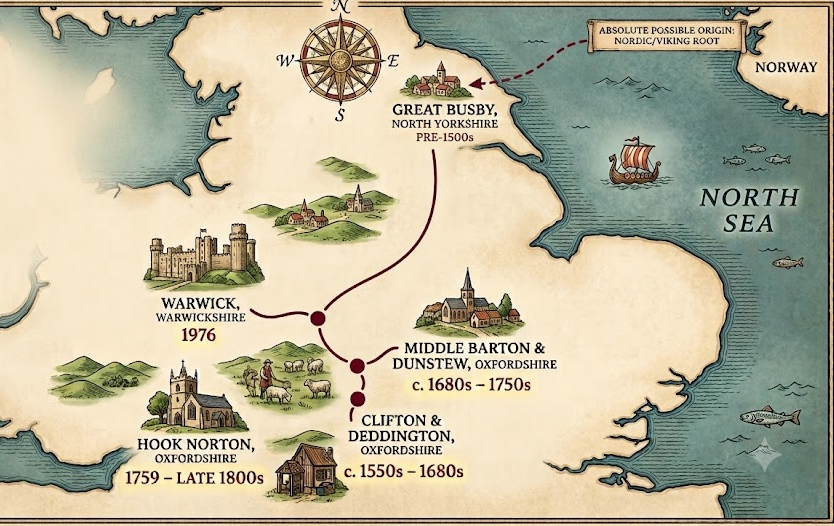
During the era of the Danelaw (spanning the 9th to 11th centuries), Viking settlers established roots in Yorkshire, founding the village of Great Busby. This settlement was officially recorded in the historic 1086 Domesday Book. It was from these northern settlements that our ancestors eventually migrated south toward the Cotswolds in the 1200s, drawn by the booming agricultural economies of the abbeys.
A Note on the Scottish Connection: There is another town named Busby in East Renfrewshire, Scotland. Because the name is essentially a topographical description (a farmstead by the bushes), it appeared wherever Norsemen settled. The Scottish branch likely represents an entirely separate family line that formed under the same Danelaw naming conventions.
The Lions of the Cotswolds & The Wool Trade
Upon migrating to Oxfordshire in the 13th century, the early Busbys found their fortune as sheep farmers and wool merchants working alongside the local monks and abbeys. The key to this wealth was a rare, majestic breed of sheep originally brought to the British Isles by the Romans: the Lions of the Cotswolds.
Renowned for their large size and extraordinary, silky fleeces, these sheep produced some of the highest quality wool in medieval Europe. Throughout the 14th and 15th centuries, the Busby ancestors capitalized on this, acting as wool butchers and exporting the raw, silky wool directly to the weaving powerhouses of Florence, Italy. This international trade laid the financial foundation for the family.
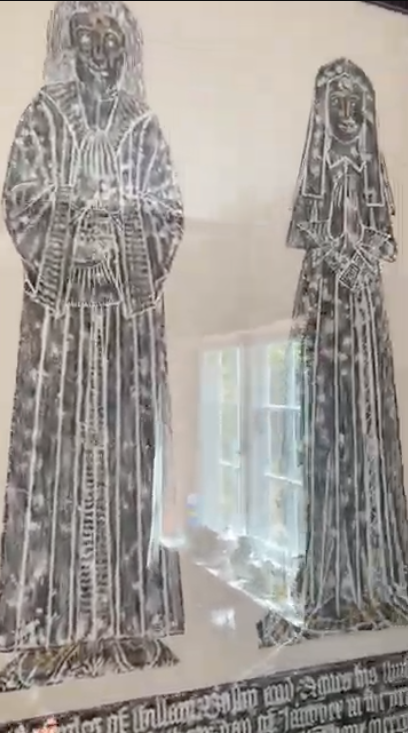
This historic brass rubbing depicts William and Agnes Busby in 1513, originally hidden under a rug in Great Tew church, honoring their massive success as wool merchants.
Generational Consistencies & Traits
A deep analysis of over 500 years of family records reveals striking consistencies that define the Busby lineage:
The "Busby Eyebrows": A famously strong, dark genetic trait passed down through the generations, so prominent that relatives often joked, "you can tell a Busby by their eyebrows!" This trait is incredibly consistent and can even be seen perfectly depicted in the historic portraits of our famous relatives.
Devotion to the Church: A continuous thread of church involvement runs through the centuries. From Simon Busby (1598) leaving barley to the Deddington church, to John Busby endowing church bells and altars, to Henry Busby (1855) founding the Hook Norton Temperance Band. The family regularly sponsored pews, screens, and bell-ringing traditions.
Longevity: In eras plagued by high infant mortality, the Busby adults showed remarkable resilience. Many family members, such as William (died aged 78 in 1785) and Henry (died aged 77 in 1933), lived deep into their 70s and 80s.
500 Years in Oxfordshire
Our ancestors left an indelible mark on Oxfordshire's landscape. A notable testament to this is the collection of ancient Busby gravestones located in Chipping Norton church, which were carefully removed from the elements and reinstated directly into the church floor in 2011 to preserve our history.
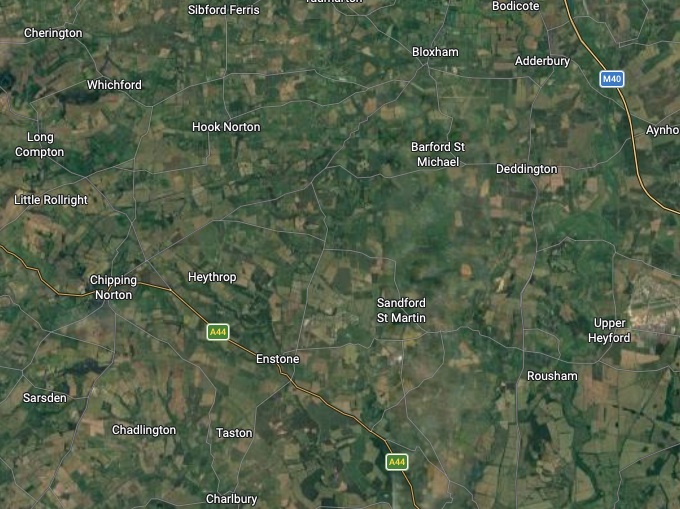
Clifton & Deddington: The foundational roots from the 1500s through the 17th century.
Enstone & Great Rollright: Home of the Reade and Spelsbury families, who intermarried with the Busbys.
Dunstew & Middle Barton: Transitional homes for the family in the 18th century before firmly planting roots further west.
Hook Norton: The true heartland of the modern family. From 1702 onwards, generations operated as master tradesmen here.
An Anglican priest who served as the famously strict Headmaster of Westminster School for over 55 years. His portrait in Christ Church College distinctly shows the classic "Busby Eyebrows". Among the many illustrious pupils he shaped was the legendary architect Sir Christopher Wren, the man responsible for rebuilding St Paul's Cathedral. Dr. Busby's tombstone is prominently placed in Poet's Corner in Westminster Abbey, and he famously donated the black and white tiled floor still seen in the Abbey today.
A prominent Royalist lawyer who worked for the Verney family in Buckinghamshire. For his dedicated service, he was granted a knighthood and a family crest. While he is an extended branch of our direct paternal lineage, his crest was proudly (if unofficially) adopted by many later Busbys who carved it onto their tombstones across Oxfordshire.
Dr. John Walter Busby & The Official Crest
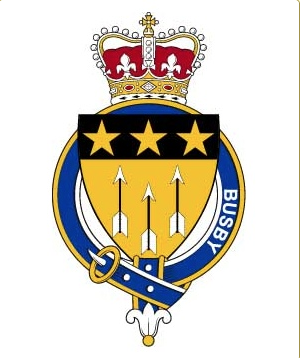
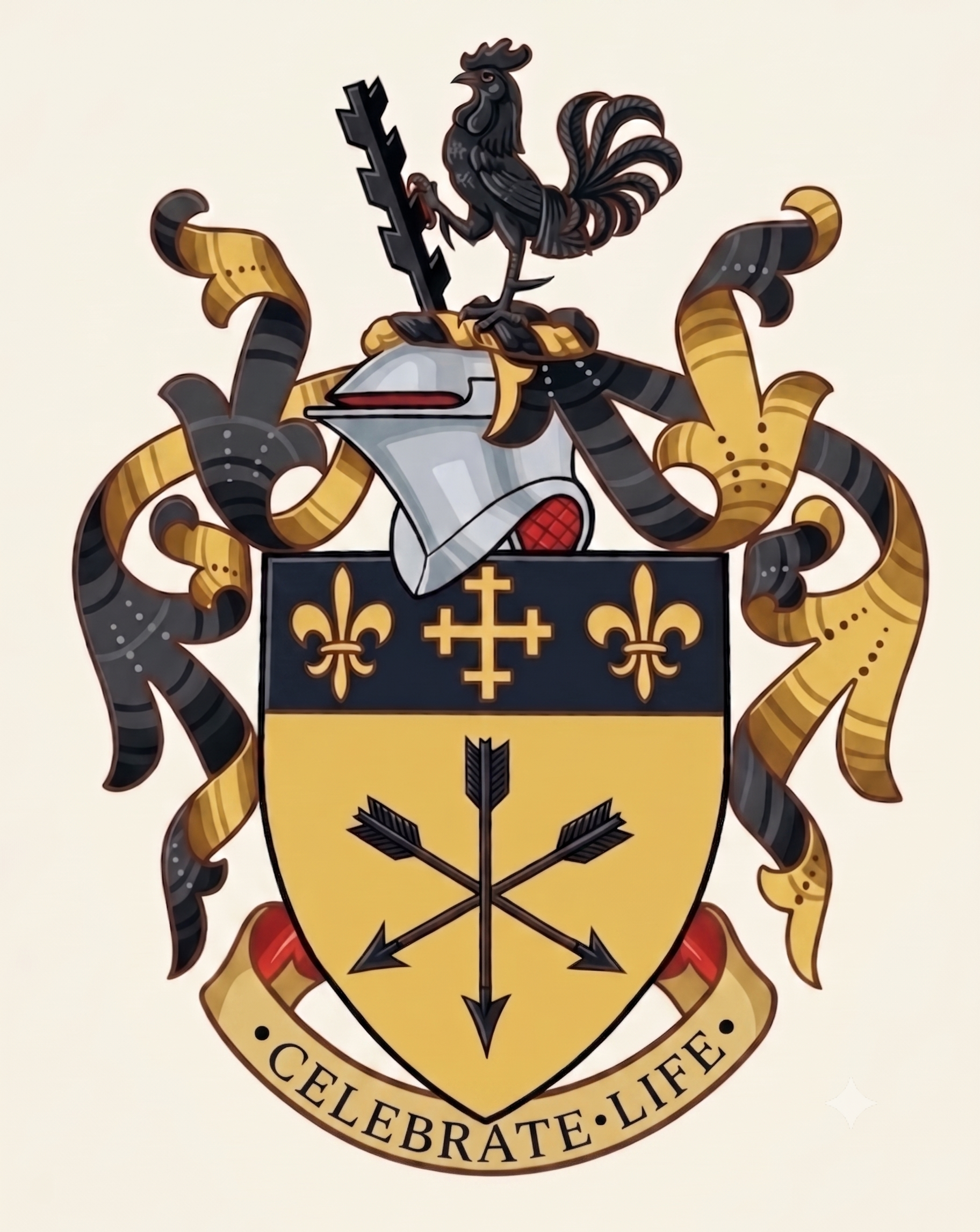
While the earlier generations "borrowed" the arms of Sir John Busby, Dr. John Walter Busby proudly solidified this specific branch of the family's legacy. A doctor of medicine residing in Warwick, he successfully petitioned the College of Arms and was granted a true, official Coat of Arms in 1976. This formal recognition marked a proud milestone in documenting the family's rich heritage and establishing its professional medical credentials in the modern era.
The assumed (unofficial) crest of Sir John Busby
The Official Grant of Arms (1976)
The Busby Family Tree
Tracing the direct paternal line, recorded siblings, and notable offshoots. Tap each box to expand the generation.
Generation 1: John Busby (Died c. 1558)
Symond (Simon) Busby (Direct Ancestor)
William Busby
Jane Busby
Generation 2: Simon Busby (Died c. 1598)
John Busby (Eldest son)
William Busby (Direct Ancestor)
Alice Busby (m. Henry Radford)
Generation 3: William Busby (Died c. 1609)
Simon Busby (Direct Ancestor)
Christobel Busby
Richard Busby
John Busby
Elizabeth Busby (m. Edward Marshall)
Bridetts Busby
Mary Busby
Notable Branch:Dr. Richard Busby (1606–1695) - Headmaster of Westminster School
Notable Branch:Sir John Busby - Royalist Lawyer & Knight
Generation 4: Simon Busby (Died 1650)
Job Busby (b. 1632, d. 1653)
Thomas Busby (b. 1633)
Elizabeth Busby (b. 1634)
William Busby (b. 1636, d. 1636)
Mary Busby (b. 1636)
Richard Busby (b. 1638)
Simon Busby (b. 1641) - Glazier
Robert Busby (b. 1642, d. 1644)
Robert Busby (Direct Ancestor, b. 1644)
Anne Busby (b. 1648)
William Busby (b. 1650)
Generation 5: Robert Busby (Baptized 1644)
Robert Busby (Direct Ancestor, b. 1684)
Thomas Busby (b. 1685)
Elizabeth Busby (b. 1686)
Symon Busby (b. 1687)
John Busby (b. 1695)
Generation 6: Robert Busby (Baptized 1684)
William Busby (b. 1707)
Jon Busby (b. 1710)
Ann Busby
Benjamin Busby (Direct Ancestor, b. 1721)
Elizabeth Betty Busby (b. 1726)
Generation 7: Benjamin Busby (Baptized 1721)
Elizabeth Busby (b. 1750, d. 1750)
Elizabeth Busby (b. 1751)
John Busby (b. 1752)
William Busby (b. 1754)
Sarah Busby (b. 1755)
Benjamin Busby (Direct Ancestor, b. 1759)
Thomas Busby (b. 1760)
Ann Busby (b. 1762)
Betty Busby (b. 1765)
Generation 8: Benjamin Busby (Baptized 1759)
Benjamin Busby (Direct Ancestor, b. 1796)
Elizabeth Busby (b. 1798)
John Busby (b. 1801)
William Busby (b. 1804)
Thomas Busby (b. 1808)
George Busby (b. 1811)
Generation 9: Benjamin Busby (Baptized 1796)
Mary Busby (b. 1823)
Henry Busby (Direct Ancestor, b. 1825)
Charles Busby (b. 1827) - Threshing machine worker
Ann Busby (b. 1829)
Eliza Busby (b. 1831)
William Busby (b. 1833) - Grocer
John Busby (b. 1835)
Anna Busby (b. 1838)
Selina Busby (b. 1840)
Benjamin Busby (b. 1843) - Wheelwright and carpenter
Generation 10: Henry Busby (Born 1825)
Fanny Busby (b. 1849)
Bertha Busby (b. 1851)
Eliza Busby (b. 1853)
Henry Busby (Direct Ancestor, b. 1855)
Benjamin Busby (b. 1858, d. 1864)
Mary Anna Busby (b. 1860, d. 1876)
George Busby (b. 1862) - Slater and painter
Benjamin Busby (b. 1866, d. 1956) - Grocer's assistant
Generation 11: Henry Busby (Born 1855)
Marion Busby (b. 1879)
Ben Busby (b. 1881)
Henry Harold Busby (b. 1883)
Walter Busby (b. 1887)
Charles William Busby (b. 1890)
Horace Busby (b. 1893)
Emma Ada Busby (b. 1895)
Ralph Busby (b. 1897)
Alice Mary Busby (b. 1902)
Original Archival Transcripts
Below are the raw, verbatim transcripts from the primary historical research.
GENERATION 1. JOHN BUSBY of CLIFTON, DEDDINGTON 1558
John Busby of the hamlet of Clifton, Deddington, Oxfordshire is the first proven direct ancestor that I have found for the ancestry of the Busbys of Hook Norton. The Busby family has lived in the village of Hook Norton for over 300 years and indeed on the maternal side of the family (Goffe family, earliest mention 1511) there is proof of direct ancestry in Hook Norton for at least 500 years. The earliest and almost certainly the grand-daddy of all the Busbys of Oxfordshire was Alexander Busby of Milcombe, a neighbouring village of Hook Norton, who purchased a 'hide' from Eynsham Abbey in 1241. (see 'A Tale of Busbys").
John Busby of Clifton was a husbandman and died circa 1558. His Will was proved at Oxford in that year. He requested his body to be buried in Deddington churchyard.
GENERATION 2 SIMON BUSBY of CLIFTON, DEDDINGTON 1598
Simon Busby, our direct ancestor, was a husbandman like his father, John. He died circa 1598 and his Will proved at Oxford. Simon left 10 shillings for the poor of Clifton and Deddington and a bushell of barley to Deddington church.
GENERATION 3 WILLIAM BUSBY of CLIFTON, DEDDINGTON 1609
William Busby our direct ancestor, was also a husbandman and died circa 1609. He was buried in Deddington churchyard. We also know that his wife was called Elizabeth and she lived long enough to re-marry.
GENERATION 4 SIMON BUSBY of DEDDINGTON 1650
Simon Busby of Deddington our direct ancestor, died in 1650. Entry of his burial at Deddington is in the parish register. Anne is also mentioned in the Oxfordshire Hearth Tax 1665 as having 3 hearths in Clifton, Deddington. This meant that she probably lived in a house with six to eleven rooms and was of the yeoman class...
GENERATION 5 ROBERT BUSBY of DEDDINGTON baptised 1644
Robert Busby our direct ancestor was baptised in Deddington church November 24th 1644. Our Robert married Mary Reade of Enstone on 4th January 1682 at Heythrop. However our Mary Reade who became the wife of Robert Busby, is almost certainly the lady who bought the family property in Hook Norton in 1702...
GENERATION 6 ROBERT BUSBY baptised DEDDINGTON April 1684
Robert Busby our direct ancestor, the eldest son of Robert and Mary, was baptised in Deddington church. He married Sarah Spelsbury of Enstone at Kiddington in 1705. Amazingly grandfather's brother, great uncle Charlie Busby had told my brother John that the family came from the village of Spelsbury but in 250 years the surname became translated into the village of that name. Sarah was the great granddaughter of the rector and minister of Great Rollright and the name varies in the parish register as Pilsburie and Spilsbury. Her great grandfather John Spelsbury died and was buried at Great Rollright in May 1598 but the family remained in Rollright for several generations. Katherin Pillesburye, his daughter, leased the 'mease and two yardlands in Roulandwright'. Nine years later the lease from Brasenose College was granted to Joane, John's widow, 'for the better bringing up of the late rector's children'! ...Robert Busby died in 1750 and was buried at Dunstew and was stated to be 'from Middle Barton'. Sarah, his wife, died in 1758 and was also buried at Dunstew. The children of Robert and Sarah were as follows:- 1. William Busby baptised at Enstone 1707, 2. Jon Busby baptised at Sandford St Michael 1710, 3. Ann Busby b?, 4. Benjamin Busby baptised Dunstew 1721, 5. Elizabeth Betty Busby baptised Dunstew 1726.
GENERATION 7 BENJAMIN BUSBY baptised Dunstew 1721
Benjamin Busby our direct ancestor proved to be the link that enabled me to trace our ancestry back from Hook Norton to Deddington and therefore find another two hundred years of proof of the family's roots. Benjamin appeared in the Hook Norton registers in 1750 when he married Ann Nixon. ...Then at one meeting the guest speaker called off and Ralph said that an interesting lot of papers had been found under a bed in the village and would we care to look at these that evening before they were taken to the Record Office. In those documents was a small piece of paper that provided the vital link. It was a Settlement Certificate for Benjamin Busby. ...The Examination of Benjamin Busby of Hook Norton labourer concerning his settlement taken on oath... 8th day of November 1765. ...Signed this day and date above written before me EDW STONE. ...What was also fascinating was that the J.P. who examined Benjamin, Edward Stone, was actually also the clergyman of Chipping Norton who had first described the analgesic powers of willow bark i.e. he was the person who discovered aspirin and this was in 1763.
GENERATION 8 BENJAMIN BUSBY of HOOK NORTON baptized 1759
Benjamin, our direct ancestor, the third son of Benjamin and Ann Nixon, was baptized in Hook Norton church in 1759. Although he was not the eldest son of Benjamin and Ann, he must have been the one who continued in the house/farm property that is now, Laburnum Cottage, Queen Street, HN. He married Elizabeth Giles at Hook Norton church on October 20th 1794. ...We do have one small piece of documentation about this Benjamin which indicates that by this generation the Busbys had diversified into the building trade keeping some land but possibly not sufficient to make a living. ...a payment to Mr Goffe Overseer (to the Poor) for 'Work done at the Workhouse Lath & Plastering a partition finding all Materials for 12 yards 3 feet at £1-10 per yd'.
GENERATION 9 BENJAMIN BUSBY of HOOK NORTON baptized 1796
Benjamin our direct ancestor was baptized in Hook Norton church on May 5th 1796. He was the eldest son of Benjamin and Elizabeth Giles. He married Anna Prophett of Sibford Ferris in Hook Norton church on December 27th 1822. The witnesses of the marriage were John Harris, Elizabeth Busby, John Prophett and Ann Harris. Anna was the daughter of a well established Quaker family. Her father Henry was a yeoman farmer and her mother Anna Harris a member of an even more documented and extended Quaker farming family in Sibford. The family tree of this branch is extensive and I do have a copy but the Harrises and Busbys are mentioned in the Victoria County History of Oxford as being founder members of the Quaker movement in the 17th century in Charlbury, Oxfordshire. ...Benjamin's profession is given as a slater.
GENERATION 10 HENRY BUSBY of HOOK NORTON b1825
Henry our direct ancestor was born May 13th 1825 in the family home in what is now called Queen Street but was originally Garret Street, Hook Norton. Henry followed his father Benjamin into the building trade. On 15th April 1849 he married Mary Ann Moulder in Hook Norton church. Mary Ann was born on 14th April 1824 at Over Norton... They lived with their family in Garret Lane/Street from where Henry ran his business of painting, slating and plastering. Henry appeared to live on his own until 9th July 1903 when he had what must have been an extremely painful death from 'Volvulus of the bowel 14 days. Vomiting and Exhaustion'. ...Henry sen was described as a 'Master Slater and Plasterer' on his death certificate. Siblings of Henry:
Benjamin was born in 1858 and sadly only lived to the age of 6 years, dying on the 26th July 1864. The cause of death was 'scarlatina for 6 weeks with effusion on the brain for a week'. His death is commemorated on the tombstone of his Grandfather Benjamin Busby in Hook Norton churchyard.
Mary Anna was born in 1860 and died when she was 16 years old in 1876.
George was born in 1862. He became a slater and painter and married his first cousin, Maria Moulder, the daughter of Henry Moulder, his mother's brother. George and Maria had the following children: Elsie Maria (b 1892 d 1957), Millicent Jessie (b 1894 d 1971), Ernest George (b 1898 d 1940), Bernard Reginald Moulder (b 1899 d 1900), Sydney Moulder (b 1901 d 1965), Walter Reginald (b 1904 d 1979), Ilfra Mary (b 1906 d 2004), Julia Ann (b 1909 d 1987).
Benjamin was the youngest child of Henry and Mary Ann. He was born in 1866 and as had happened in previous generations, he had been named after a deceased sibling. By the age of 25 he was living in Stafford and earning a living as a grocer's assistant. He married a local girl Isabella Salt and they had two children: Eveline Isabel (b 1891, She married Edward James Woolhouse, d 1985) and Benjamin (b 1903 d 1903). Isabella died in 1911 and Benjamin remarried in 1915, Hannah Mary Hopper. He died in Stafford, aged 86 in 1956.
GENERATION 11 HENRY BUSBY (Born 1855)
Henry, our direct ancestor, was born in Hook Norton in 1855. This is according to the family bible, the parish register, the Census and his age at death. He followed his father into the building trade becoming a master slater and plasterer. At the age of 22, he married Emma Phipps on the 20th February 1878 in Hook Norton. ...Henry was musical and was said to have founded the Hook Norton Temperance Band (later the Hook Norton Band). In fact all his sons were instrumentalists in the band from quite an early age, followed by his grandsons. It was even called the 'Busby band'. Henry died only 11 months later on the 20th August 1933 aged 77. He was stated to be a retired builder... He left his three sons, Charles Willam, Horace and Ralph all his tools and stock in trade to be divided in equal shares. Henry and Emma's tombstone can be seen in Hook Norton churchyard today within a stone's throw from their home.